Divers sharpen safety skills
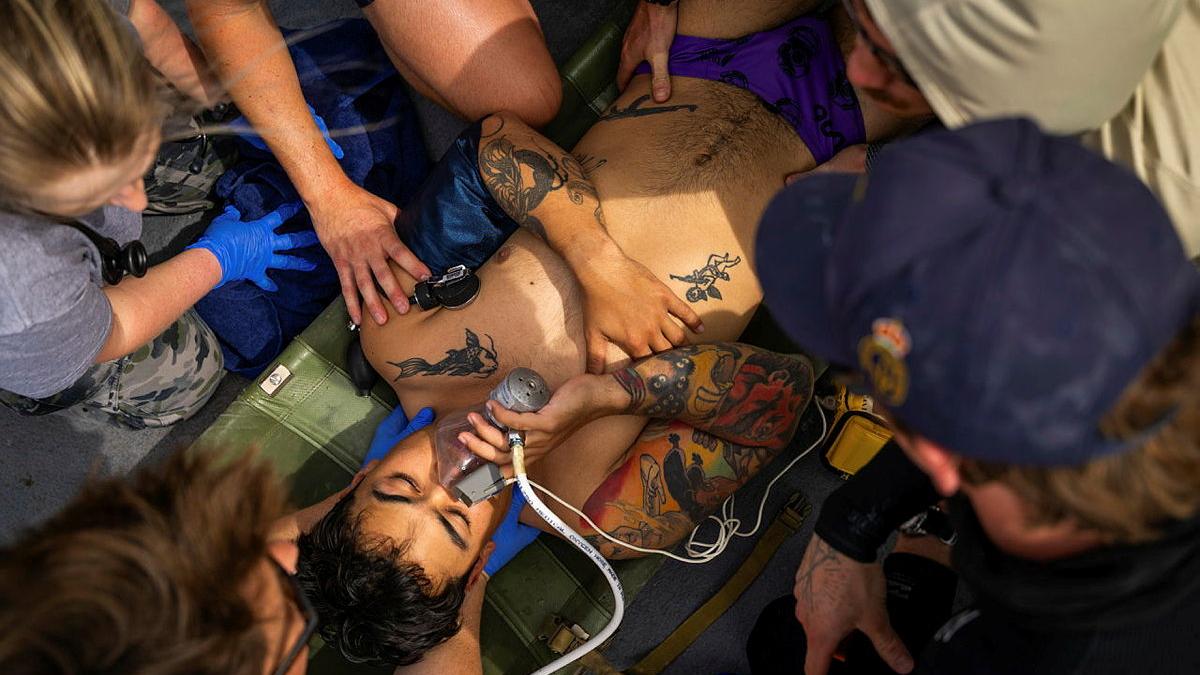
Exercise Dugong commenced off the east coast of NSW this month, bringing together three navies to strengthen their combined mine warfare, clearance diving and seabed warfare capabilities.
The Australian-led exercise develops the skills, tactics and techniques required to identify and neutralise underwater threats, helping keep vital shipping lanes and commercial ports safe and open.
Dugong provides a realistic training environment for the RAN, Royal New Zealand Navy and US Navy to demonstrate their unified maritime capability, maintain freedom of navigation and protect sea lines of communication in an increasingly complex maritime environment.
Safety remains a central priority throughout the exercise, with participants rehearsing medical response procedures to ensure they can respond effectively to an emergency during diving operations.
POMED(U) Rhys Noblett said the exercise demonstrated the medical team's ability to safely transfer a simulated casualty from a dive site to a health centre.
“Safety is always at the forefront of every exercise we conduct, and today’s training demonstrated that commitment,” PO Noblett said.

PO Noblett said effective coordination was essential during a medical emergency, allowing medical personnel to focus on treating a casualty while other team members maintained operational responsibilities.
“When I’m focused on treating a patient, I need to know that other people on board can step in and cover the responsibilities I would normally manage,” he said.
“They can help keep the rest of the team safe, oversee the ongoing dive activity and operate the recompression chamber. That coordination helps protect everyone involved.
“Safety must remain paramount in every exercise.”
The live exercise enabled Australian, US and New Zealand personnel to rehearse a complete casualty evacuation in real time, from a dive vessel to shore and then into an ambulance.
Participants assessed the safety and effectiveness of each stage of the transfer, while identifying opportunities to improve coordination and communication between teams.
LEUT Sarah Bate, medical officer underwater medicine, highlighted the importance of understanding the responsibilities, capabilities and equipment of personnel involved in the evacuation process.
“A key learning has been the value of working together and understanding one another’s roles: each person’s scope of practice, the equipment they carry and how they use it,” LEUT Bate said.
Dugong demonstrates the importance of maintaining a highly capable and integrated maritime force to protect vital sea lines of communication and support regional security.


Related stories


