Out at sea, not out of the fight
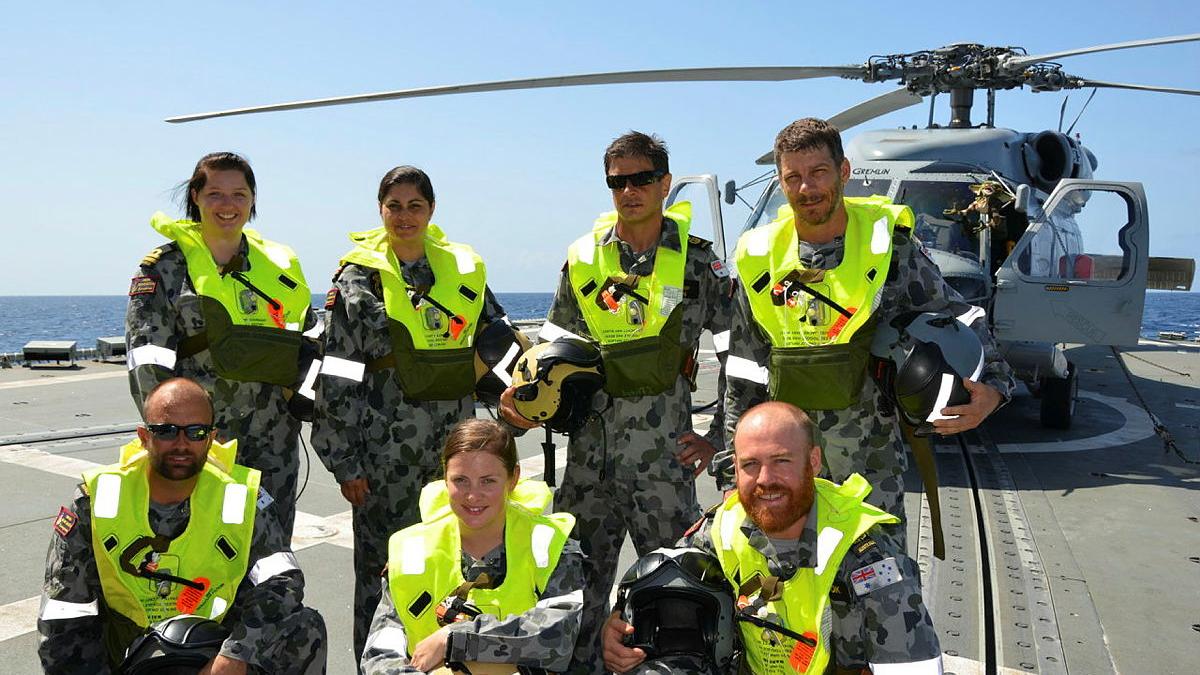
When people think about Australia’s contribution to the Afghanistan campaign, they often picture soldiers on the ground or pilots in the air.
Less visible, but equally important, was the work being done at sea by RAN personnel.
For former HMAS Newcastle air warfare and force protection officer, CMDR Alisha Withers, the deployment highlighted the complex and integrated nature of modern military operations.
“Navy's role in the Afghanistan campaign was largely to intercept the drugs being smuggled out of the country by sea, which the Taliban used to fund their operations,” she said.
Operating as part of the Combined Maritime Forces, Newcastle conducted maritime security operations across vast areas of the Middle East and East Africa.
The ship's missions included counter-narcotics activities, anti-piracy patrols off the coast of Somalia and operations to disrupt weapons smuggling networks supporting terrorist organisations.
The ship also conducted multiple transits through the strategically significant Strait of Hormuz.
“It's funny how everyone knows where that is and why it's so important now,” CMDR Withers said.
“But 20 years ago, I don't think people appreciated how significant it was.”
CMDR Withers was responsible for coordinating many of the ship’s boarding operations during the deployment from April to October 2013.
Her role included locating suspect vessels using ship and helicopter surveillance, through to managing communications with boarding teams and reporting outcomes to coalition headquarters in Bahrain.

CMDR Withers’ typical day involved launching the ship's embarked helicopter to search for vessels of interest and conducting boarding operations on traditional cargo vessels, known as ‘dhows’.
“We had two boarding parties on board and two helicopter crews, which enabled us to do a lot of boardings,” she said.
One operation remains particularly memorable.
“We spent days hunting a specific dhow as the monsoonal weather was building,” CMDR Withers said.
“We finally found them, shadowed them for a day and commenced a boarding at first light.”
The search continued for almost 48 hours as boarding teams worked around the clock, in difficult sea conditions.
“Boardings in rough weather can be especially difficult; your body has to work so much harder to maintain balance, which is exhausting,” she said.
“The whole mission was frustrating and everyone was tired, but we stayed so focused on the task.”
Beyond operational success, the deployment demonstrated the value of international partnerships.
Newcastle worked alongside forces from the US, France, Türkiye and many other coalition nations, sharing knowledge and refining procedures, while contributing to a common mission.
'The reality is that war is so multi-faceted and, while intercepting the drugs the Taliban were using to fund their operations was just one of the ADF’s mission sets, it was an important one.'
While the mission was rewarding, the time was not without its challenges.
CMDR Withers’ deployment with Newcastle lasted six months, with only brief opportunities alongside ports to rest and recharge. Staying connected with family and friends was far more difficult than it is today, and many sailors missing milestones back home.
“Communications on the ship wasn't like it is today,” she said.
“Missing important moments with family could be difficult, but we tried to make up for it when we could with activities like late-night birthday parties in the operations room.”
Perhaps because of these challenges, the ship's company formed stronger bonds during their time at sea.
“Certainly in the operations room, where I worked, we became a really tight-knit team, looking out for each other and having fun when we could to break up the tension,” she said.
Throughout her deployment, CMDR Withers visited Tanzania and the Dead Sea in Jordan, and went swimming in the Seychelles, to enjoy short breaks with her shipmates where they could.
Looking back, she hopes people better understand the significance of the role maritime forces played in supporting operations in Afghanistan.
“People often question why Navy wear the Afghanistan campaign medal, when we never stepped foot in Afghanistan,” CMDR Withers said.
“The reality is that war is so multi-faceted and, while intercepting the drugs the Taliban were using to fund their operations was just one of the ADF’s mission sets, it was an important one.”
Related stories


