Ready for rough conditions in the Indo-Pacific
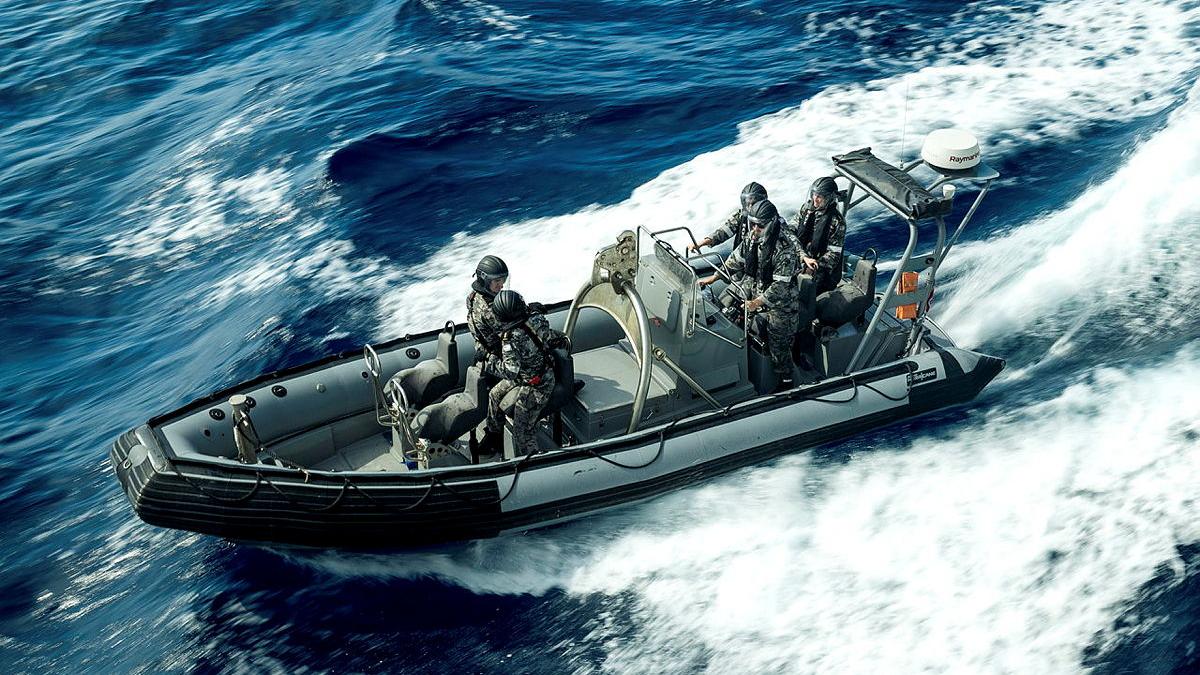
HMAS Perth’s crew sharpened their skills with boat drills in the waters off the coast of Vietnam, in the South China Sea.
Using the RHIB on board, the hands-on training tested the crew’s ability to safely coordinate the smaller boats.
Launching and recovering boats at sea is a time-honoured tradition, and core mariner knowledge for any boatswain's mate.
CPOB Candyce Mackenzie oversees the boating operations as the ship’s buffer.
“Boating evolutions are one of the most dangerous seamanship evolutions we do, so it is critical to train in as many adverse conditions as possible,” she said.
“We always have a thought that the times we will need to launch the boats in an emergency will generally be in rough weather so we need to be prepared.”
Modern warships rely on hydraulic cranes on board, but the central skills of ropes and winches still remain strong.
'The times we will need to launch the boats in an emergency will generally be in rough weather so we need to be prepared.'
ABBM Brendon Lane has experience across the fleet, from serving in HMA Ships Canberra and Stalwart to various smaller patrol vessels.
During the boat drill on board Perth, he manned the lines on the upper deck of the ship.
“I keep an eye on the RHIB at all times and make sure it’s parallel to the ship when we’re winching it up or down,” he said.
“It’s important the RHIBs stay that way otherwise they might tip over in mid-air.”
Boat drills are one of many training exercises used to sharpen the skills of those on board the Anzac-class frigate while at sea on an Indo-Pacific regional presence deployment.
While in the region, Australia conducts its operations in accordance with international law, in particular the United Nations Convention on the Law of the Sea.
The aim of the deployment is to support long-term security and prosperity by preserving a rules-based order, enhancing cooperation and developing capability in South-East Asia.
Related stories


