Preparing for the worst brings out their best
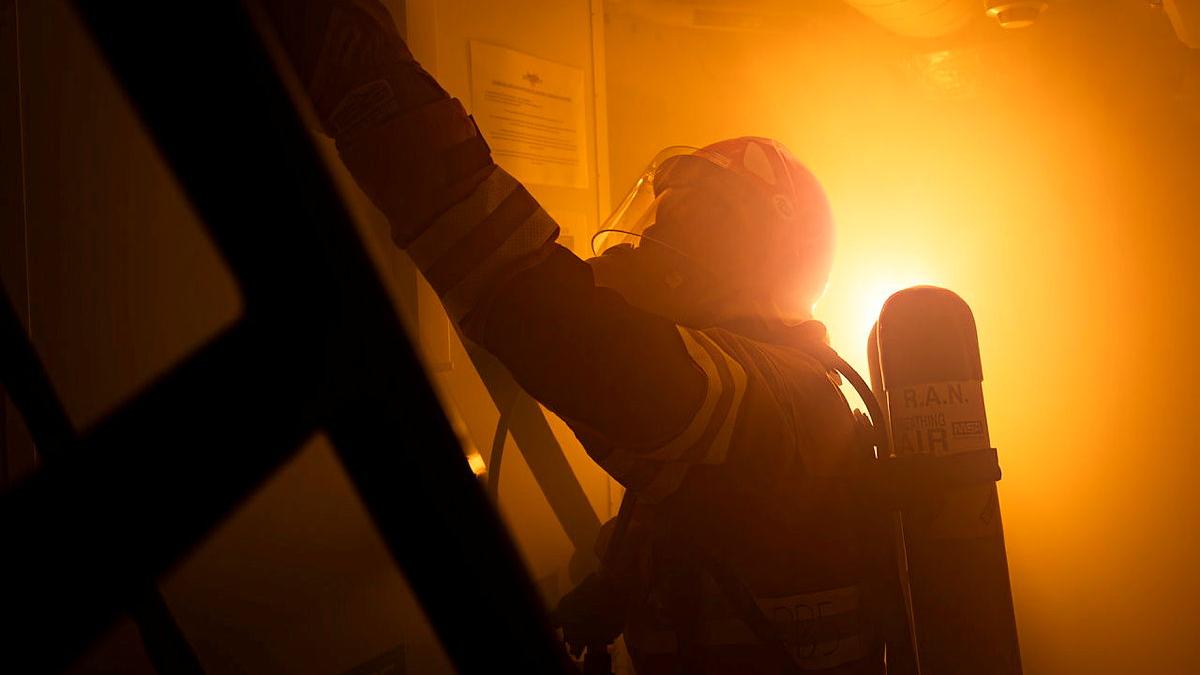
Recent realistic damage-control training has prepared HMAS Sydney’screw to deal with any real emergency by day or night.
While transiting across the Pacific Ocean from Pearl Harbour, Hawaii, to Guam, the crew conducted rigorous and regular drills to simulate a wide variety of whole-ship responses to damage-control incidents.
SBLT Lachlan Renwick said, aside from their professional qualifications, all crew members have other roles and duties on board to respond to emergencies.
“I am studying and training to be an officer of the watch on Sydney, but during whole-ship damage-control exercises, every member of ship’s company has to be ready to fight a fire, flood or toxic hazard,” SBLT Renwick said.
“In a recent training scenario on board we were fighting simulated fires, floods and supporting simulated casualties after the ship received battle damage.
“We are trained in firefighting at the RAN’s School of Survivability and Ship Safety, but donning the fire suit, using OCCABAs (breathing apparatus) and fire hoses in the different compartment spaces on the ship at sea builds my confidence about what I have to do in a real-time scenario.”

AB Ashley Lammens is a part of the ship’s stores team but during an emergency she takes on a crucial role in one of the repair bases, which are the teams that coordinate local responses to damage-control incidents.
“During damage-control exercises, I am responsible for the breathing apparatus board and for recording the firefighters’ roles, as well as calculating how much air they have to fight the fire,” AB Lammens said.
LEUT Thandi Murada was the damage-control officer in charge of coordinating the whole ship’s damage-control efforts, relaying information regarding the state of survivability to command.
“I am an assistant marine engineering officer on board and normally in charge of a repair base,” LEUT Murada said.
“Having the opportunity recently to step up into the role of the damage-control officer to coordinate the damage-control efforts of all people on board the ship was an invaluable experience, considering this is normally the job of a deputy marine engineering officer.
“Ultimately, we rely on having the practical skills, confidence in the abilities of yourself and your team, and currency and experience through continual training that is what will save the ship in the case of a real emergency.”

Related stories


