On the hunt for stealthy targets
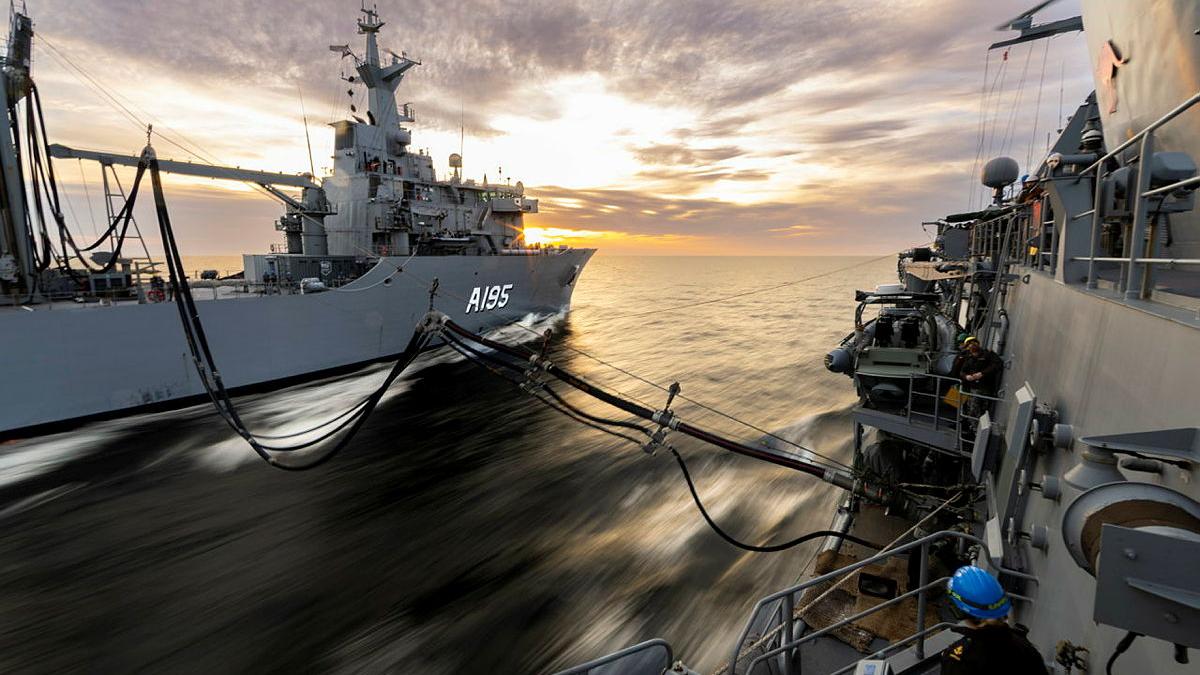
The realistic and complex nature of the RAN’s annual Anti-Submarine Warfare Exercise (ASWEX) gave Australian and Japanese participants the ideal environment to hone operational skills and build capabilities.
Commander of the Australia Maritime Task Group CAPT Darin MacDonald praised all units involved for their dedication to practising and perfecting skills during the week-long activity off Australia’s east coast.
“From ships to helicopters to submarines, to RAAF aircraft and a Japanese frigate, all involved were focused on honing our best practice and practising real-world tactics,” CAPT MacDonald said.
“ASWEX gives us the annual opportunity to let our enabled surface and air forces detect, track and counter sub-surface threats, while concurrently exercising our submarine force in its ability to remain undetected by surface and airborne sensors.
“I commend and thank all units and their personnel for putting their all into this activity for the improvement and development of the ADF.”
This year’s exercise involved four RAN ships, two RAN submarines, four RAN MH-60R Seahawks, a RAAF P-8A Poseidon and the Japan Maritime Self-Defense Force (JMSDF) frigate JS Kumano with its embarked helicopter.
CO HMAS Stuart CMDR Aaron Scott spoke of the perspective obtained by working as a task group.

“ASWEX has been a great exercise for Stuart’s ship’s company to go from working as a single ship to working in a task-group environment,” CMDR Scott said.
“It has allowed us to elevate our thinking – not only in the warfare domain, but also in contested logistics, engineering support and aviation operations too.”
CO HMAS Brisbane CMDR David Mason said his personal highlight was having submariners embarked on board Brisbane to give their perspectives.
“This has enabled us to get into the mind of a submarine captain or an operator to improve our skill sets to defeat the submarine mission,” CMDR Mason said.

“ASWEX has tested all aspects of anti-submarine warfare, including all the enabling functions such as planned maintenance and task group logistics, which is vital in enabling us to conduct our mission in a contested environment.”
A key logistics provider for the exercise was the auxiliary oiler replenishment ship HMAS Supply, led by CO CMDR Kylie Turnbull.
Supply operated three out of five of its replenishment stations during ASWEX, transferring diesel and aviation fuel, frozen food and ammunition to other task units, while its MH-60R contributed to the anti-submarine warfare effort.
“As the task group’s underway logistics hub, we worked 24/7 to overcome the challenges of weather, navigation hazards, equipment failure and fatigue to ensure that we could provide the task group with what they needed, when they needed it, to enable them to win the anti-submarine warfare fight,” CMDR Turnbull said.
For JMSDF participants on board Kumano, the key takeaway was an understanding of different naval operations and communication protocols.
See more images here.
Related stories


