Policy revision to enhance combat behaviours
A new chapter in the Army Training Manual is preparing soldiers for high-pressure modern warfare.
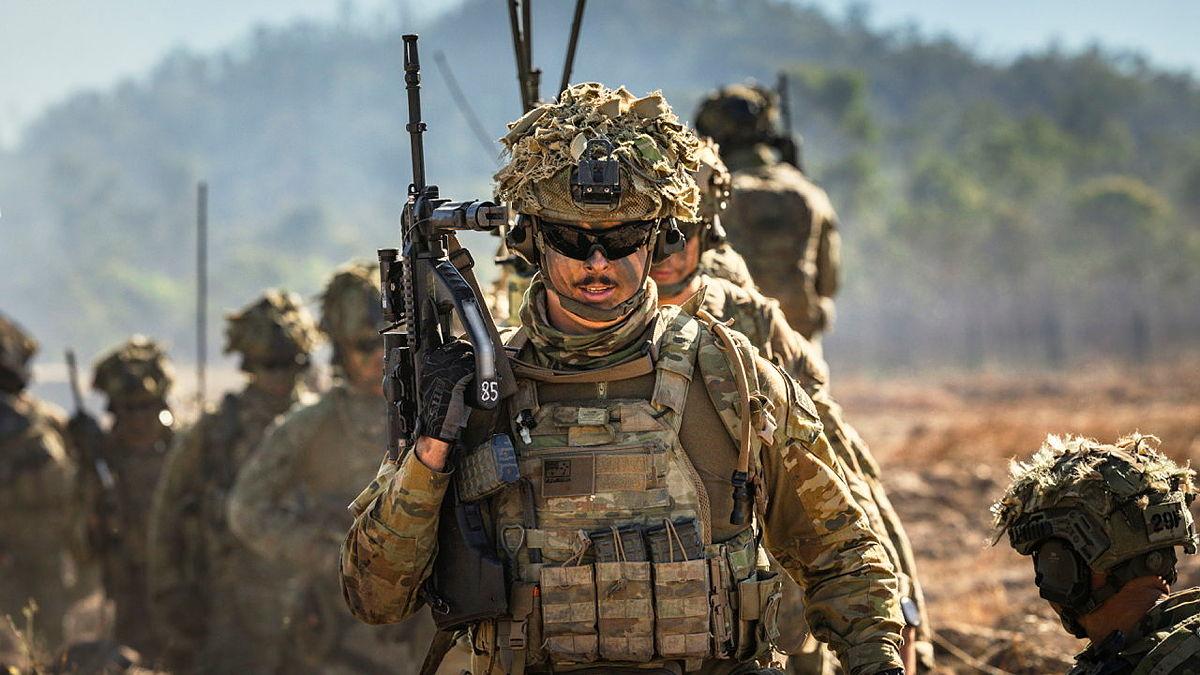
Training policy that develops how soldiers can instinctively think, act and perform effectively in stressful and demanding combat situations has been overhauled to reflect the realities of modern warfare.
The Army Training Manual governs how Army develops experts in land combat.
A new chapter in the manual, Army Combat Behaviours (ACB), is intended to better prepare soldiers for operations and war by embedding behaviours that enhance readiness, lethality and resilience during every training opportunity.
The ACB framework details essential behaviours to be instilled within the Land Domain Training System across three broad pillars – battle conditioning, battle lethality and battle survivability.
“The intent of ACB is to embed deliberate and repeatable behaviours that enhance readiness, lethality and resilience across Army. This is achieved through junior commander-led combat-focused training,” the framework explains.
It seeks to prepare soldiers for the realities of war.
“The nature of war necessitates soldiers and teams be professionally competent and physically, intellectually and morally resilient. The aim of ACB is to enable commander-led training to enhance soldier and team conditioning, lethality and survivability.”
Combat behaviour training is not constrained by rank, trade or unit, and provides commanders with guidance for prioritising and designing combat-focused training applicable to their soldiers and teams.

HQ FORCOMD’s SO1 Training Campaign Plans, Lt-Col Dan Belanszky, said it was not new doctrine but a revised framework to assist in the development of tailored contemporary training and to create a combat mindset as the basis for sub-unit and unit training.
“The character of warfare has changed, as demonstrated by recent international conflicts and escalating regional threats. So too must our mindset and conditioning change to ensure our soldiers and teams are more resilient physically, mentally and spiritually, to better prepare them for and cope with the realities of combat,” Lt-Col Belanszky said.
“Army Combat Behaviours inculcate enduring soldier skills that are developed through realistic, repetitive training to ensure soldiers can think, fight, survive, and remain effective under the pressures of war.
“This includes operating on a modern battlefield under the threat of systems and when communications are contested or denied.”
Commanders will deliberately include ACB practice and revision during individual and small team unit training.
The framework allows tailored training in response to evolving strategic circumstances, ensuring all ACB remain fit-for-purpose across operational contexts.
The ACB framework references The Soldier, Army’s new handbook issued earlier this year as part of the Essentials of Land Warfare series, aimed at restoring a clear understanding of Army’s purpose and to prepare soldiers for conflict.
DCA Maj-Gen Chris Smith said the next war the Army might have to fight could be considerably more difficult than the last.

Related stories


