Live-fire shows effect of combined attack
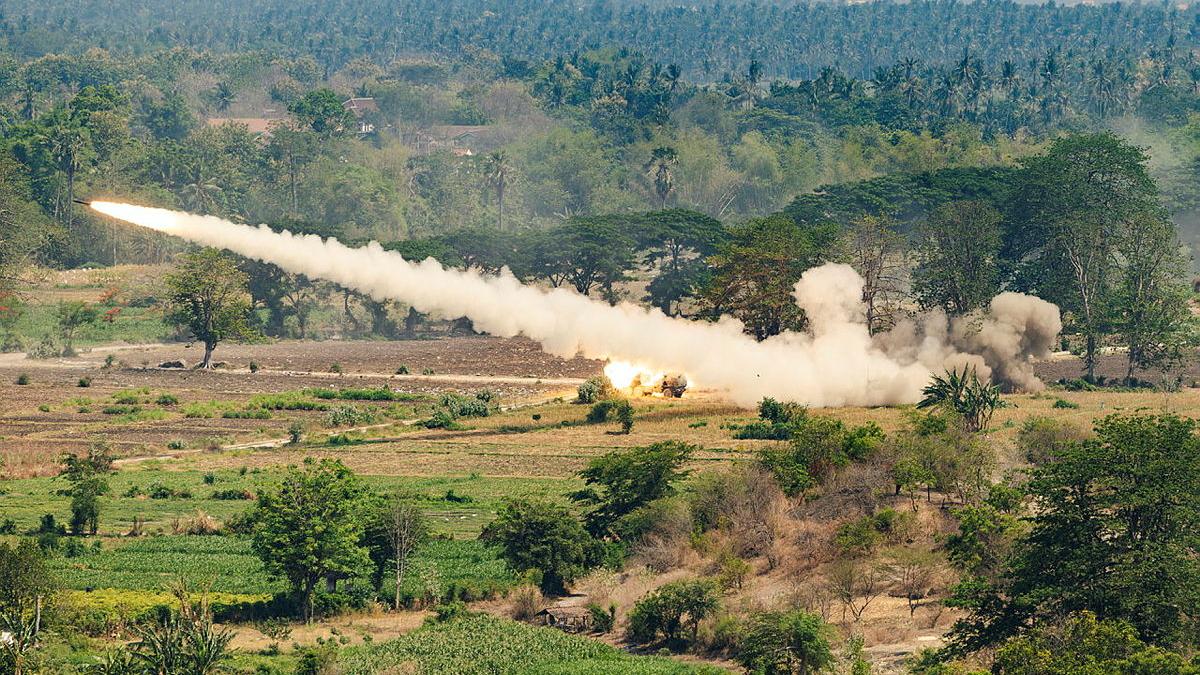
Modern weapons can strike targets hundreds of kilometres away, but securing the final few hundred metres remains a job for soldiers on the ground.
It is a contrast that played out in East Java on October 20, where Australian and Indonesian forces combined everything from long-range rocket systems to infantry weapons for the final live-fire demonstration of Exercise Keris Woomera 2026.
More than 300 personnel took part in the live-fire activity, which followed a simulated operation to reclaim territory occupied by an opposing force.
The scenario began at a distance. Indonesian Air Force Super Tucano aircraft conducted the opening strikes, followed by rocket artillery from the Indonesian marines’ Vampire system and the Australian Army’s high mobility artillery rocket system (HIMARS).
HIMARS can deliver precision-guided weapons on targets hundreds of kilometres away, but striking an objective and securing it are two different challenges.
CAPT Blake Dusi, the 2RAR operations officer, said despite the reach of modern weapons, soldiers were still needed to secure territory.
“It doesn’t matter how far out you target something, you always need a person there at the end of the day to seize that terrain,” CAPT Dusi said.
As the demonstration progressed, the focus shifted from long-range firepower to the soldiers tasked with closing the distance.
Australian M777 howitzers and Indonesian 105mm artillery provided supporting fire before infantry began their advance.
Mortars, anti-armour missiles and automatic grenade launchers were then employed as the troops moved towards their objective, responding to threats encountered along the way.

The soldiers then not only had to secure the ground, but defend it.
“Long-range fires, artillery and air can’t hold that ground,” CAPT Dusi said.
“It’s the task of our members in the infantry to seize and hold ground. No other corps can conduct that role.”
In the final phase, Australian and Indonesian infantry occupied defensive positions and responded to a simulated enemy counterattack.
It is a sequence designed to demonstrate the different demands of modern land warfare, where long-range technology and close combat work together.
The live-fire activity involved seven dispersed firing positions and multiple weapon systems operating within a coordinated safety framework.
It also marked the culmination of almost a year of preparation between the ADF and Indonesian National Armed Forces (TNI).
Beginning on October 12, Keris Woomera involved about 1000 Australian and more than 1200 Indonesian personnel in activities across air, land and maritime environments.
CAPT Dusi said training with partner forces reflected how Australian soldiers would operate in a real conflict.
“We’re never going to fight alone,” he said.
“Today I’m glad it was the TNI.”

See more images from the Exercise Keris Woomera live-fire.
Related stories


