Neutralising air threats from the ground
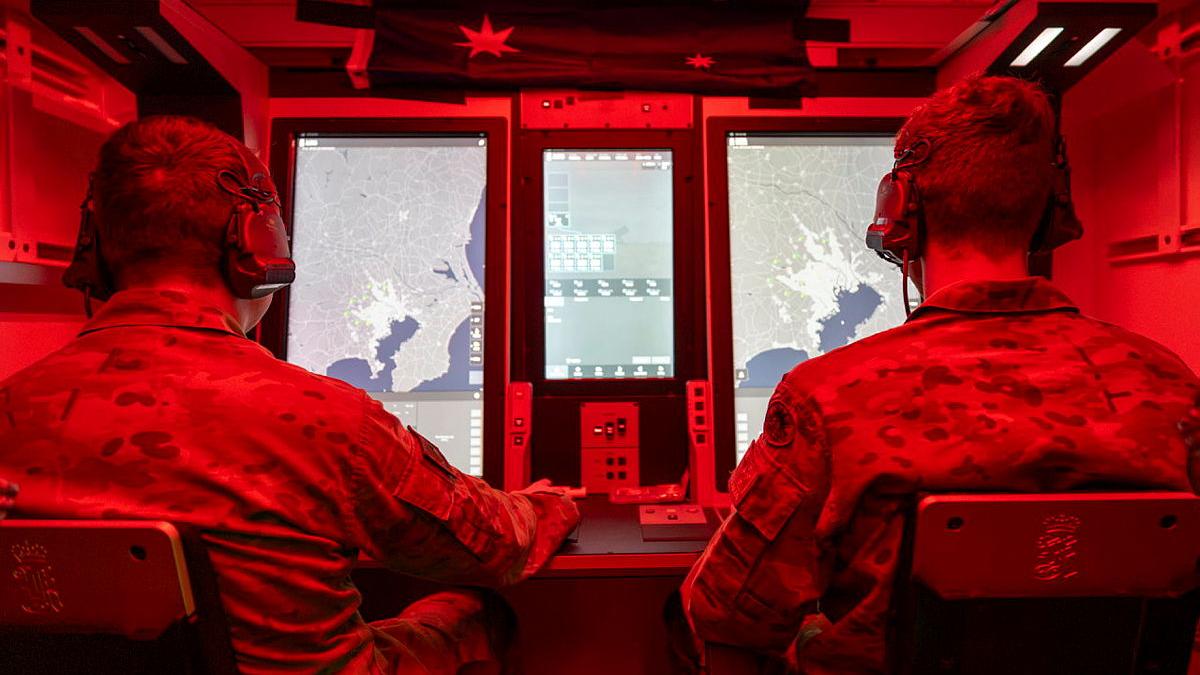
The 10th Brigade’s fire distribution centre (FDC) deployed to Japan last month to train with Japanese and United States forces on how different ground-based air defence (GBAD) systems could operate together.
GBAD detects, tracks and engages air threats, enabling commanders to maintain freedom of manoeuvre across the battlespace and protect critical assets.
It was part of Orient Shield, the annual exercise at which teams from 1 Div, the Japan Ground Self-Defense Force (JSGDF) and the United States Army improve interoperability and situational awareness.
After years working in Australia’s air defence community, MAJ Mick Parry, battery commander of the GBAD team, was excited to see this equipment deployed overseas.
“This exercise provides each country the opportunity to test their policies and procedures, bringing their unique experiences to allow us to operate as a combined and integrated team,” MAJ Parry said.
“Deploying NASAMS mission equipment overseas for the first time and working hand in hand with our Japanese and United States counterparts is a significant milestone.
“Having ground-based air defence personnel together, gaining an understanding of how each country communicates, plans and makes decisions, is an essential learning point.”

LT Cameron Wendell served as the tactical control officer in the FDC, rapidly acquiring and sharing information among nations to ensure any threats were identified and neutralised.
“Each morning we sit in a mission brief of the air battle simulation that’s about to occur,” LT Wendell said.
“During the scenario, there are a variety of air threats targeting our defended asset, and we are coordinating through both the JSGDF and the US Army to ensure the threat is neutralised.
“It’s been a fantastic opportunity working with the US Army and their Patriot system, the Japanese and their Hawk system and us with our NASAMS; we are able to provide a holistic air defence effect and learn valuable lessons from each other.”
Establishing communication and tactical data links was an essential step managed by GNR Nash Gibbling, a command-and-control systems operator in the FDC, providing the information all three nations needed to complete the mission.
“It’s been great to get the FDC over here and deploy it in an exercise environment. It has let us stress-test the capability and identify some of the issues that may be faced when we are away from our normal Q store system,” GNR Gibbling said.
“When on exercise in Australia in air battle simulations, we have only ever had notional Patriot and Hawk systems.
“It’s great to see all our systems and people coming together in a trilateral air defence environment, ultimately training how we would need to fight.”
See more images from Exercise Orient Shield.
Related stories


