The ‘boffins’ who keep Army’s Apaches in the air
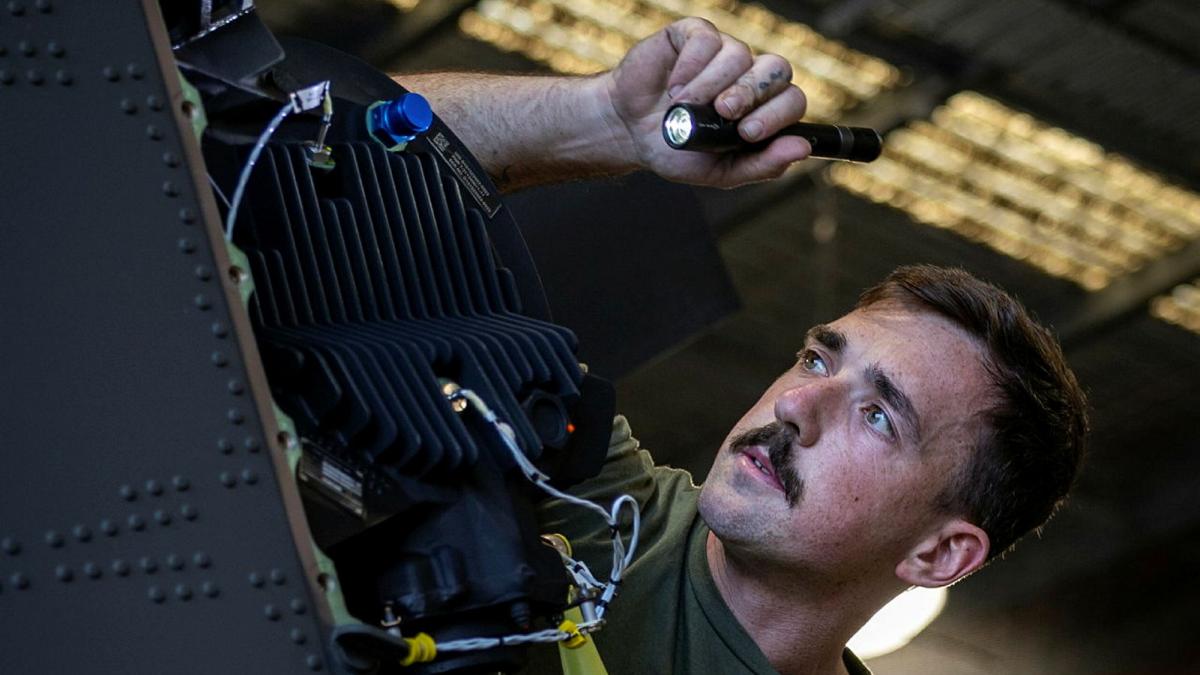
While Australian AH-64E Apaches fired Hellfire missiles, rockets and the 30mm gun on Exercise Possum Guns, aviation maintainers from 1 Avn Regt worked to keep the fleet in the sky and guns blazing.
Avionics technicians such as Cpl Jamen Caulfield maintain the Apache’s electrical and electronic systems, including navigation, weapon sighting and communications.
Known as ‘boffins’, they diagnose faults reported by the pilots, test and calibrate communications and sighting systems, and replace faulty components.
They also conduct pre-flight checks in the workshop and stand by on the flightline immediately before Apaches launch, for last-minute troubleshooting.
Cpl Caulfield joined the trade after working at the Australian Skills Quality Authority, and noticed the role come up on his vetting list.
He asked a friend who worked in avionics what the job was like, and six weeks later he was at Kapooka.
“I like the challenge when you've got a fault on the aircraft. We are the ones that troubleshoot trying to find what’s wrong with a system,” Cpl Caulfield said.
“I love what I do. My goal is to get the aircraft back in the air. I like the fact I can come in and just give that my entire focus.”
If an avionics technician is the same as an auto electrician on a car, then an aircraft technician is the mechanic.

Aircraft technicians are responsible for airframe, fuel, engine, flight controls, drive train and mechanical weapon systems maintenance.
For Exercise Possum Guns, aircraft technician Cpl Cody Thompson said they also conducted pre-fire testing on all weapon systems.
“That’s servicing and testing our Hellfire racks, rocket pods and our 30mm gun. It can take up to a week of maintenance per aircraft prior to firing,” he said.
Both trades start their training at the RAAF School of Technical Training in Wagga Wagga to learn the basics of aero skills and aircraft systems.
From there, they choose an airframe to specialise in and conduct specific type training at the Rotary Wing Aircraft Maintenance School at Schwartz Barracks in Oakey.
After the school and on-the-job training at online aviation units, technicians earn a Cert IV in Aero skills mechanical or avionics, depending on their trade.
Cpl Thompson said the training and qualification were among the best in the world.
“We are held to a high standard, and rightfully so. We have air crews’ lives in our hands, and we have the lives of ground forces,” Cpl Thompson said.
“If we don't get aircraft up in the sky to support ground forces in a war, people will lose their lives.”
Part of the reward of all their hard work on Exercise Possum Guns is travelling to Townsville Field Training Area to view the Apaches in full flight, using the weapons they help maintain.
“I still, seven years in, look up at aircraft flying over and think it's awesome. I just love my job,” Cpl Thompson said.

Related stories


