Tigers show their stripes in Malaysia
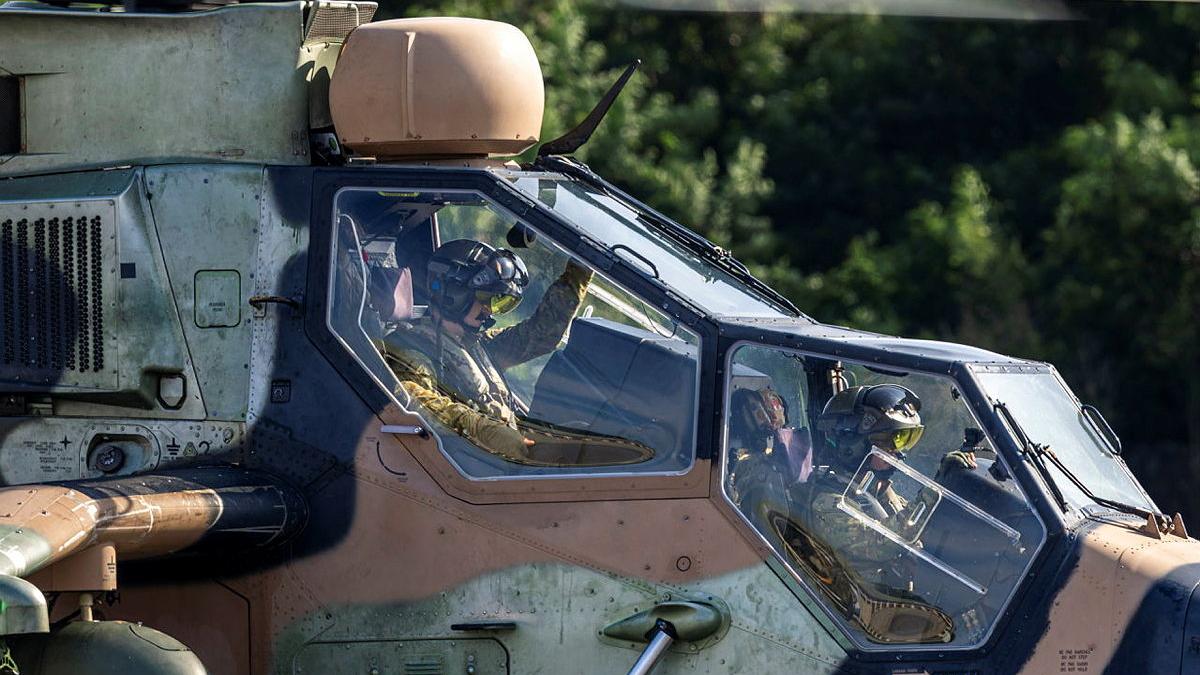
Members of Task Unit Marlin and 2/30 Training Group contributed aviation and ground-based capabilities respectively to Exercise Keris Strike for three weeks in July.
The annual multilateral army exercise comprised units and assets from Malaysia, the United States and Australia.
CO 2/30 Training Group Lt-Col Adam Seary has seen the exercise grow from a modest infantry contribution as part of the Rifle Company Butterworth (RCB) rotations, to the deployment of a combined arms regional combat team.
This year it was supported by an aviation unit of armed reconnaissance helicopters.
“This year we're very pleased to have the opportunity to return to Kota Belud with a more capable and credible infantry combat team, augmented with attack aviation elements from Aviation Command,” Lt-Col Seary said.
Maj Rhys Davies, of 1st Aviation Regiment, led Task Unit Marlin, which largely comprised of members from 162 Reconnaissance Squadron out of Darwin.
“The ARH Tiger can perform offensive air support reconnaissance roles, and escort roles – it’s a pretty versatile aircraft,” Maj Davies said.
“The reason we brought Tigers to Keris Strike is to fit into a larger aviation task force.”

The task force was led by the US Army’s 2nd Combat Aviation Brigade, which brought UH-60M Black Hawks and HH-60M medevac helicopters.
US Lt-Col Mike Poling, Cmdr of Task Force Nightcard, said the Black Hawk as their all-utility mover of equipment and personnel.
“It is the most proliferated helicopter in the United States Army, and it can do a wide range of things – from air assault to standard movement of cargo,” Lt-Col Poling said.
“We also have specially outfitted medevac helicopters.
“Combined rehearsals are just an invaluable way to see those tactics, techniques and procedures brought together in real life.”
Exercising in this region also exposed the US and Australian participants to a more challenging battlespace.
'Being able to come out to exercise the live-fire, for example, is not something we would normally be able to do back home.'
On a visit to her troops, Adjutant General of the Guam National Guard Brig. Gen. Karin Watson said it was a great opportunity for them to do what they normally did – in a garrison environment – in a field environment at a much larger scale.
“One of the challenges that we have in Guam is space and land,” Brig. Gen. Watson said.
“Being able to come out to exercise the live-fire, for example, is not something we would normally be able to do back home.
“Being able to come out here and really hone our skills in an austere environment – that maybe work on a tactical level and bring it up to a more collective level – pays huge dividends for us.”
The exercise also engendered cohesion building.
“Working with the Malaysians has been fantastic. Malaysian Army, and not to mention the Malaysian civilian organisations, have provided a great deal of assistance throughout the exercise,” Maj Davies said.
“We are continuing to develop the coalition relationship we have with the US Army as well. Working with them is very smooth, just like plugging in and getting on with the job.”
Lt-Col Poling concurred.
“Just through shared hardships we naturally form friendships, which ultimately on the battlefield or through humanitarian relief will pay dividends if we ever were called on in a real-world scenario,” he said.
The exercise culminated with a live-fire demonstration, comprising infantry and artillery live-fire on the ground, and a live-fire and flight from the Black Hawks and Tigers in the air.

Related stories


