Decontamination capability bolstered for 7 Bde
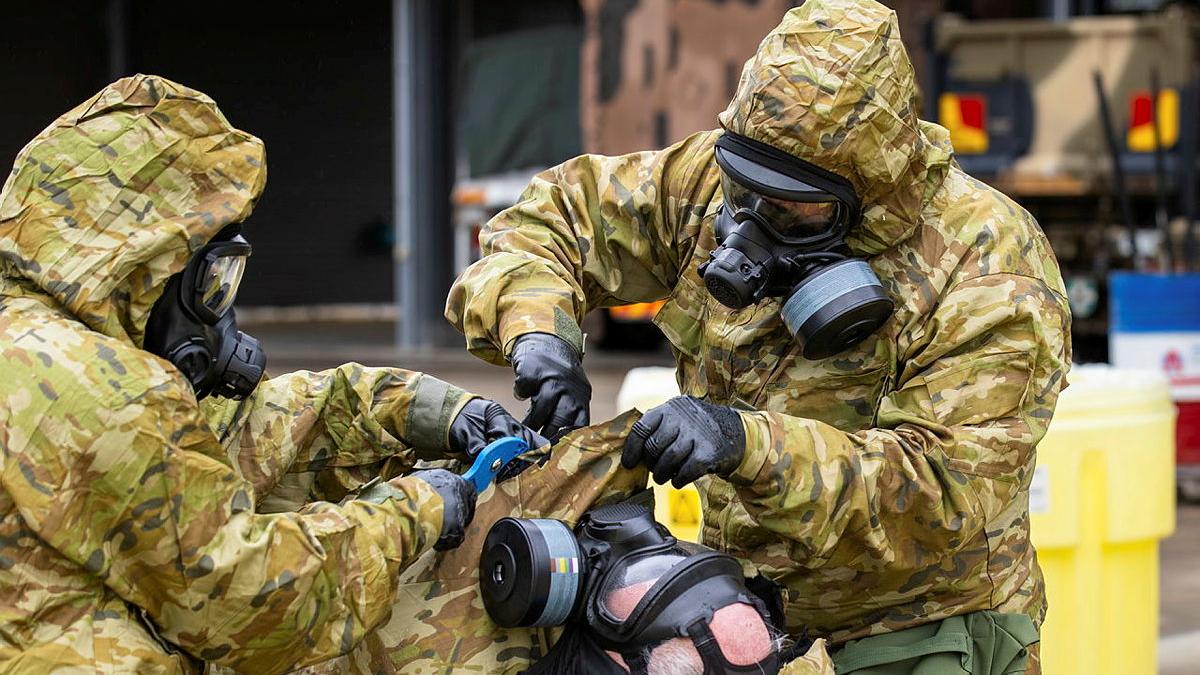
Personnel from 7 Bde have been trained in new, more efficient decontamination processes for people and equipment exposed to chemical, biological, radiological and nuclear defence (CBRND) threats.
Members of 2CER’s Engineer Support Squadron were among the first to train with the processes.
Combat engineer specialist Spr Isaac Buckley said the new equipment decontamination station for vehicles, and personnel decontamination station for members, their weapons and body armour, transformed what was a very labour-intensive and specialised process into a production line.
“It frees up the specialist engineers to continue their broader military engineering role, including sustainment of life tasks like water purification or bridging duties, whereas previously, a CBRN decontamination activity could jeopardise the sustainability of a whole position by drawing skilled personnel away from those other roles,” Spr Buckley said.
Previous procedures were resource-heavy, requiring a significant number of engineers and amounts of specialist equipment, such as plant equipment to dig trenches and drainage to decontaminate large groups of personnel.
The new systems can be operated with a reduced number of personnel while increasing the throughput of personnel and equipment.
With additional supply-chain support to replenish consumables, and additional manpower, operations can be scaled to decontaminate combat teams or even battle groups.
CBRND instructor WO2 Jason Harmon said it marked a shift from the ‘survive surprise’ mindset of a CBRND attack to ‘survive to manoeuvre’.
“We’ve always had the understanding of how we can survive in a contaminated environment, but our previous protocol was to withdraw troops out of the danger area, decontaminate them and get out safe,” WO2 Harmon said.
“Now, we can operate with prolonged sustainment in the contaminated environment.”

Related stories


