Training today for tomorrow’s fight
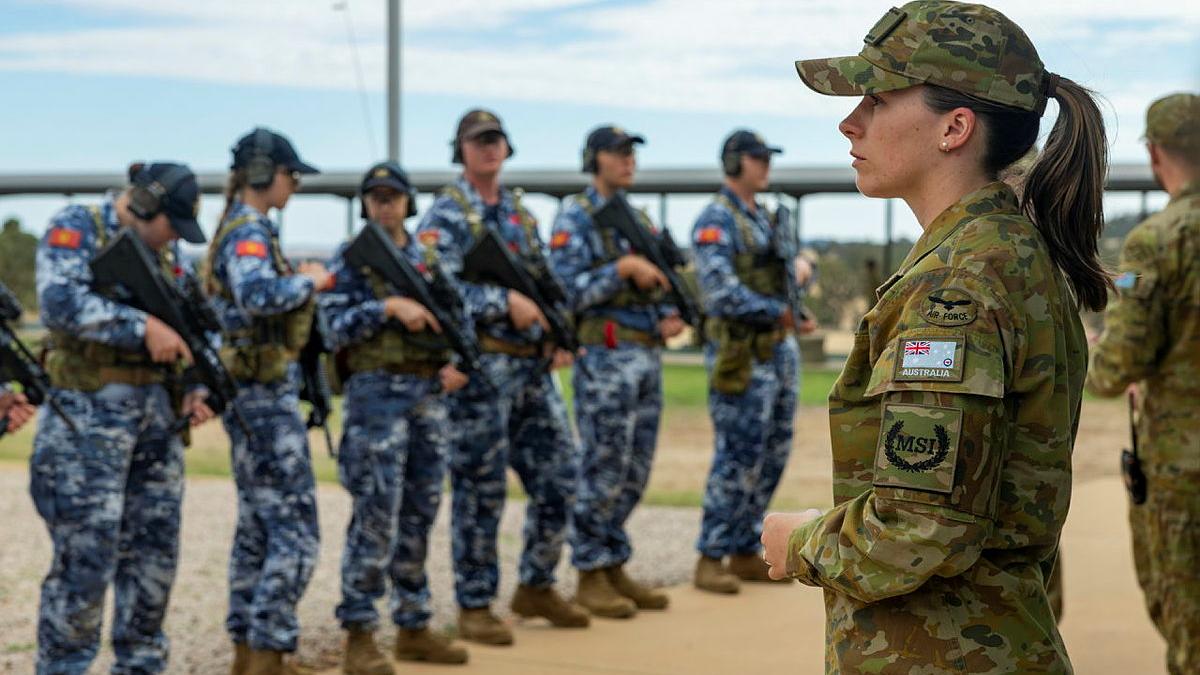
Capability starts with people and, for Air Force, that starts with training.
During a visit to HQ AFTG and RAAF Base Williams Laverton, Warrant Officer of the Air Force WOFF-AF Ralph Clifton reinforced the critical role military training plays in building the resilient, mission-ready aviators that Australia relies on in an increasingly complex strategic environment.
His visit came as AFTG extended each of its Initial Military Training programs by two weeks. From 2027, the 1RTU Recruit Course will change from nine weeks to 11 weeks, and the OTS Initial Officer Course will lengthen from 12 weeks to 14 weeks.
The changes reflect AFTG's commitment to continuous improvement and ensuring graduates are prepared not only for today's Air Force, but the challenges of the future.
WOFF-AF Clifton said every aviator who leaves training should be more capable than when they arrived.
“That standard doesn't change because the environment becomes more complex. If anything, it becomes more important,” he said.
“The people moving through our training system today will help deliver Air Force capability for years to come, and what we do with them now shapes what they'll be capable of achieving in the future.”
With about 2800 trainees and students progressing through its schools at any given time, AFTG's role extends beyond delivering qualifications. It is responsible for building the resilience, adaptability, professional standards and warfighting mindset that underpin operational effectiveness.
CDR AFTG AIRCDRE Brett Williams said the course extensions are part of an effort to continually strengthen the training system through evidence, feedback and lessons identified.
'The extra time we've built into these courses is valuable because it gives our instructors more opportunity to develop the qualities that matter most under pressure.'
CDR AFTG AIRCDRE Brett Williams said the course extensions are part of an effort to continually strengthen the training system through evidence, feedback and lessons identified.
“In the last three years, AFTG expanded our training capacity rapidly because Air Force needed us to, and our people delivered,” AIRCDRE Williams said.
“Now we are focused on refinement. We are listening to operational units, learning from experience and constantly looking for opportunities to improve how we prepare our people for service.
“That's not a sign that something was wrong. It's what professional military training organisations do. We listen, we learn and we improve.”
Central to that improvement are AFTG's instructors.
Every instructor plays a direct role in shaping the future Air Force. Beyond teaching skills and procedures, instructors build confidence, resilience and professional judgement in the next generation of aviators, technicians and leaders.
Their influence often extends far beyond a single course and into every unit their graduates later join.
AIRCDRE Williams said the additional training time would allow instructors greater opportunity to mentor, coach and challenge trainees in ways that strengthen individual performance and long-term workforce capability.
“Every instructor shapes the future Air Force,” he said.
“The extra time we've built into these courses is valuable because it gives our instructors more opportunity to develop the qualities that matter most under pressure: resilience, adaptability, professionalism and sound judgement.”
AIRCDRE Williams said continuous improvement for AFTG is about ensuring every course is stronger than the last, every instructor is empowered to make a lasting contribution, and every graduate leaves better prepared for service than the cohort before them.
“That commitment to learning, refinement and instructor excellence is how AFTG builds fighting depth,” he said.
“It is how resilient, mission-ready warfighters are developed, and how Air Force contributes to the integrated and focused force Australia needs to meet future challenges.”
Related stories


