Dancers stage second acts in Defence
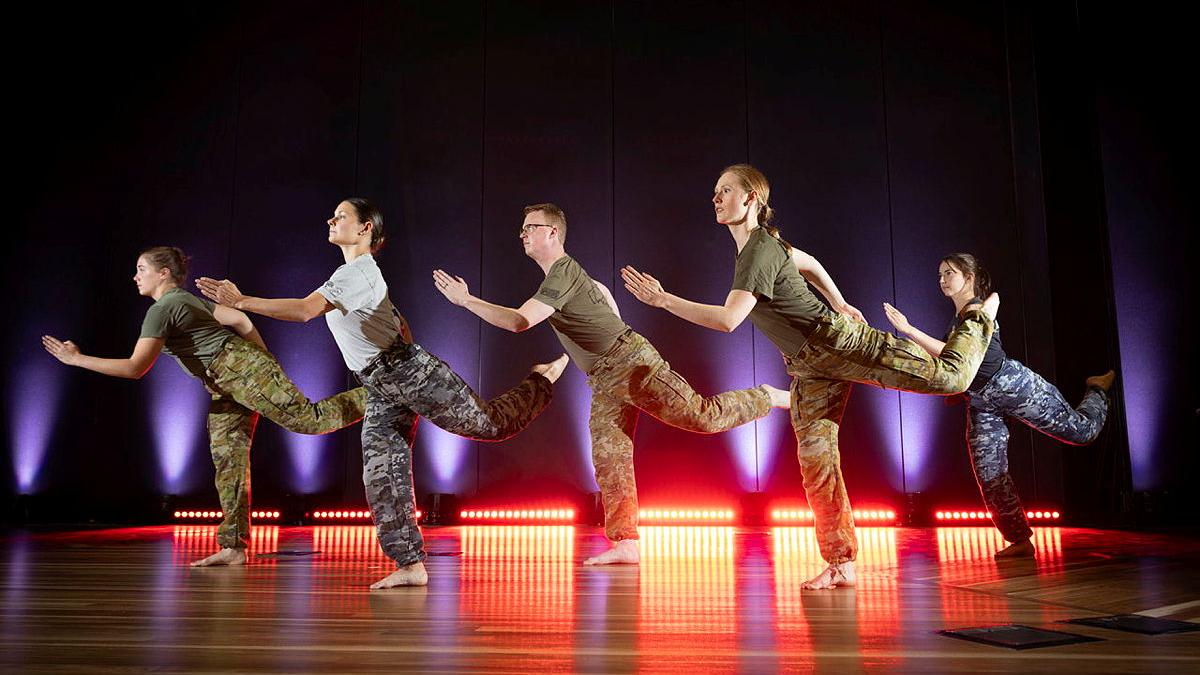
At first glance, ballet and military service may appear worlds apart. One conjures mirrored studios, pointe shoes spinning across wooden floors to Tchaikovsky; the other, parade grounds, boots striking asphalt to shouted command.
Yet for a growing number of former dancers, forging a new career in the ADF feels like a natural second act.
Among them is CAPT Eamonn George, who performed with The Australian Ballet, The Dancers Company and English National Ballet as a student, before broadening his dance career into musical theatre and television.
He originally joined the Army as a reservist general service officer, which allowed him to balance intermittent contract work and touring as a performing artist while also doing “something good and productive for fellow Australians”.
Later, seeking greater stability to support his family, CAPT George undertook a Defence-sponsored medicine degree and is now a medical officer posted to 2nd Health Battalion.
Looking back, CAPT George said his dance training set him up well for military life.
“There are certainly physical elements that transferred very directly, particularly spatial awareness, timing and balance,” he said.
“They’re useful in physical activities, basic soldier skills, and really good for drill. Additionally, when I was doing my general service officer training it was very focused on infantry minor tactics. When it comes to coordinating fire and manoeuvre of soldiers, it’s very much a piece of choreography.”
AB Jessica Brown, who performed with several ballet companies including Queensland Ballet, Houston Ballet and the Cape Town City Ballet before joining the Navy, also found the transition to Defence very smooth.
She quickly drew on the soft skills developed through dance – discipline, determination and adaptability – and excelled at physical training, including drill.
The rhythm, timing and precision of movement felt almost instinctive, and she was soon selected for the Australian Federation Guard’s precision drill team.

LTCOL Richard Maher, who runs the Dance for Veterans program in partnership with Queensland Ballet, said this parallel between ballet and military drill is not coincidental. He notes both practices share historical roots.
“Ballet was a new style of dance introduced by Louis XIV, who created it by studying the Royal Horse Cavalry and the Musketeers for a period of time,” he said.
“So many ballet basics are derived from this, for instance in ballet ‘first position’ is the ‘attention position’, and ‘second position’ is ‘at ease’.”
For many dancers, ending their performing careers can bring grief and a sense of identity loss. However, through Defence, some discover a sense of teamwork and collective purpose that echoes their former profession.
“I love being part of a team,” AB Brown said.
“Being a small part of a bigger picture.”
CAPT George described his career highlights not in terms of individual achievement, but through shared effort towards a common goal.
“For example, when you need to carry someone several kilometres on a stretcher and you’ve got your pack on and you think ‘there’s no way I can do this’. But then, with the shared energy of the team, you just get out and do it,” he said.
LTCOL Nicholas Alexander, who trained at the Australian Ballet School prior to studying physiotherapy, said Defence provided him with an enhanced sense of camaraderie. Although teamwork was still essential in both professions, he found it easier to form close friendships in Defence.
While some former dancers step away from the stage entirely, others find ways to stay connected to their roots.
Army pathology officer CAPT Melissa Turner – who has a broad dance background including ballroom, modern and jazz – said she always sought out a local dance class, no matter where she was posted.
“Not only is it a great way to get your body moving and enjoy it, but dance classes also provide a social aspect with non-Defence people, which is so important to help with work-life balance,” she said.
“It helps you buy into the community rather than feeling like you are just transiting through on posting and can give you purpose outside of just your Defence role.”
'At some point your dance career has to end, and I think Defence is a really logical post-dance career.'
Some former dancers have integrated dance more directly into their military careers.
In 2024, LS Isabella Fitzpatrick was the first creative artist recognised under Defence’s elite athlete program, allowing her to take several months of leave on full pay to perform in the children’s show Emma Memma across Australia with Emma Watkins, the former Yellow Wiggle.
Meanwhile, LTCOL Maher completed a Defence-sponsored PhD in dance, exploring how ballet training can support veterans to build physical and mental resilience after their transition out of service.
LTCOL Maher and LTCOL Alexander have been involved with the ADF Creative Arts Association (ADFCAA), which brings together dancers from across Defence to develop and perform routines at an annual festival.
ADFCAA member FLTLT Michelle Turner, who has trained across a variety of dance styles, was part of the organisation’s first dance team performance in 2023. She described the experience of working collaboratively to create routines from scratch as both challenging and rewarding.
“It’s impressive to see a group of strangers come together to choreograph and perform two complete dance routines in less than 72 hours,” FLTLT Turner said.
LTCOL Maher believes dance training is one of the best ways to prepare individuals for a career in Defence, and is an option more dancers should consider.
“At some point your dance career has to end, and I think Defence is a really logical post-dance career,” he said.
“The life of a dancer is highly disciplined and physical. Dancers are used to working closely with others in teams, even to the point where in pas de deux, their physical safety is dependent on their partners.
“So all the attributes we are looking for in our soldiers, sailors and airmen have already been embodied – consistently and at a very high level – by those who have danced professionally.”

Related stories


