Honouring the legacy of women in uniform
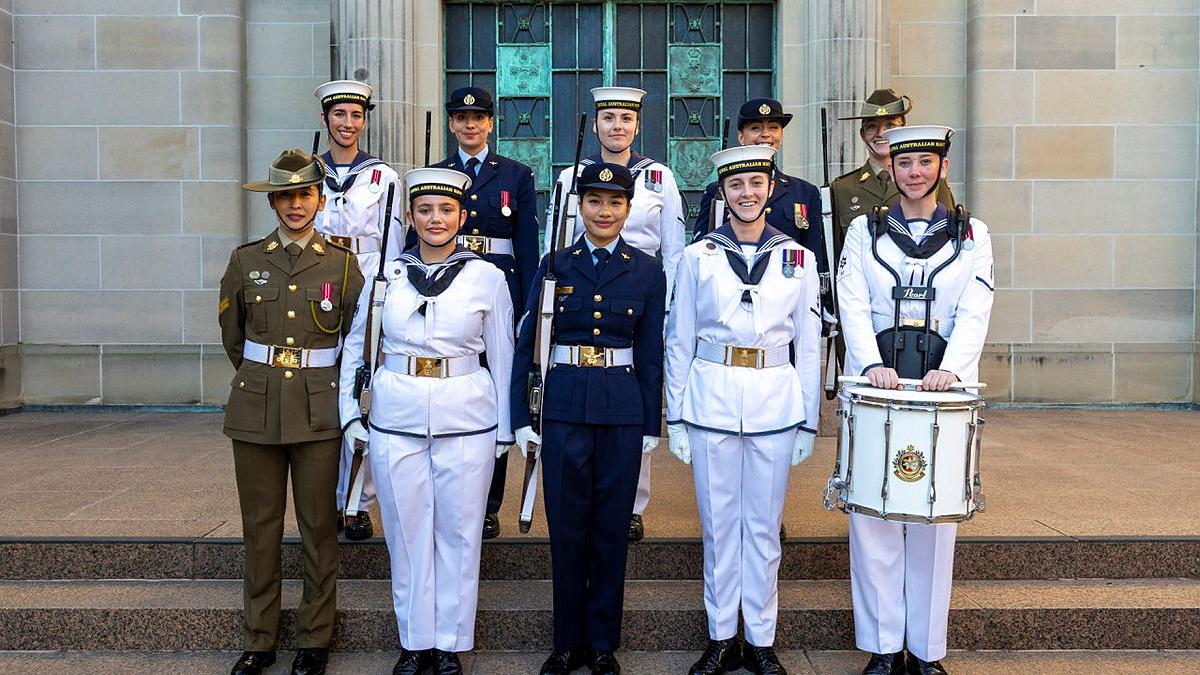
An Australian Army nurse killed in WWII was honoured by an all-female catafalque party during a Last Post Ceremony at the Australian War Memorial in Canberra, on April 15.
LT Irene Singleton was aboard the Vyner Brooke, being evacuated from Singapore with other nurses, when the ship was sunk by Japanese bombs.
Twelve nurses drowned and 21 were massacred after reaching Bangka Island in Indonesia. LT Singleton survived and was taken prisoner.
Held first at Muntok and later in camps at Palembang, Irenelaan and Puncak Sekuning, she endured starvation, tropical disease and overcrowding.
She died on February 20, 1945, never knowing that her brothers, Douglas and Kenneth, were killed in North Africa in 1942.
Her family was notified of her death in September 1945, weeks after Japan’s surrender.
AB Grace McCarter, of the Federation Guard, and a member of the all-female catafalque party, said learning about LT Singleton’s experience as a nurse and POW showed that military service extended beyond combat roles.
“Australian service isn’t just about the battlefield; it’s about care, compassion and staying true to the service you provide to your country,” AB McCarter said.
She said recognising the cost of service demanded precision and respect at every ceremony.
“We won’t put anyone on parade unless they’re up to standard, because the stakes are high,” she said.

LACW Chantelle Bradford said the all-female catafalque party acknowledged the contributions of women, particularly nurses, in Australia’s military history.
She said ceremonies such as this one reinforced the visibility and recognition of women’s service.
“They were also on the frontline and played a significant role in the conflicts we faced,” LACW Bradford said.
For first-time guard commander LS Isobel Gent, the ceremony carried personal significance.
It linked her own service with her grandmother, a former Royal Australian Air Force nurse who was in attendance.
She said honouring LT Singleton while her grandmother watched reinforced the responsibility of carrying the legacy of women who served before.
“It makes me really proud to put the uniform on and have that connection with someone in my own family who served,” LS Gent said.

Related stories


