Working together on Earth to understand space
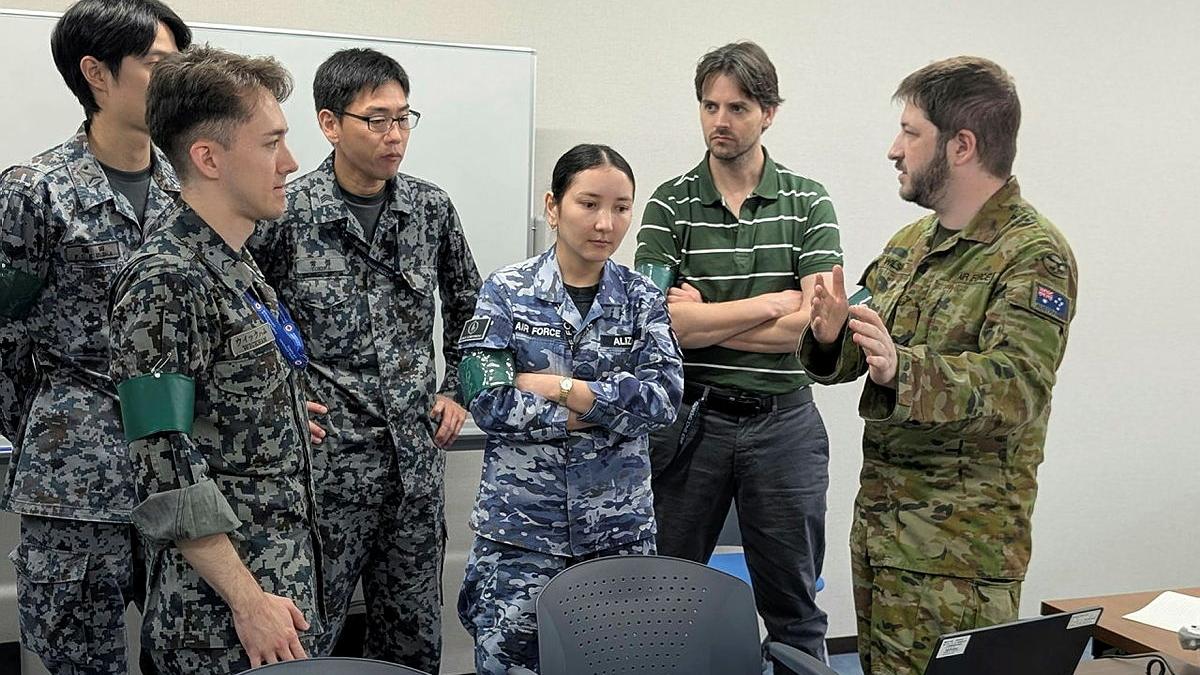
For the space aspect of Exercise Keen Sword 27, ADF Space Command and Japan Self-Defense Force (JSDF) space specialists are analysing activity in the space domain and developing a shared understanding of the operating environment.
The specialists’ analysis includes comparing orbital-analysis techniques, sharing information and exploring how space information can better support military decision-making.
For CPL Christopher Wilson, a space operations specialist with ADF Space Command, the activity demonstrated that interoperability comes from more than compatible technology.
“Interoperability isn’t just about systems being able to communicate. Our people need to understand each other’s terminology, processes, requirements and how we use information,” CPL Wilson said.
“Working together lets us identify those differences early, learn from each other’s strengths and develop ways of working that make future cooperation much more natural and effective.”
Space capabilities underpin many aspects of contemporary military operations, including communications, navigation, timing and situational awareness.
“We’re working side by side and actually working through problems together,” CPL Wilson said.
“We look at the same information, compare how each team approaches the analysis and talk through why we might reach or present an assessment differently.
“That helps us understand each other’s processes, but also each other’s goals, what information our counterparts need, why they need it and how we can better support one another.”
JSDF 2nd Lieutenant Rei Suzuki, of 1 Space Operations Squadron, helped develop the training scenario, prepare for the activity and facilitate its execution.
'Since space has no national borders, I believe it is important for countries to share observational data and their assessments of events in space.'
He said the use of Japanese sensors, combined with analysis by personnel from both nations, provided a valuable opportunity to improve their capabilities.
“In this exercise, Japan and Australia are working together on a common scenario, sharing our analysis results and learning from each other to enhance our capabilities,” 2nd Lieutenant Suzuki said.
“Since we are conducting this exercise using Japanese sensors, I believe this is a particularly valuable training opportunity for both countries.”
That cooperation produced practical lessons for both teams.
2nd Lieutenant Suzuki said exchanging views and analytical approaches had improved the accuracy of orbit predictions, while Australian personnel shared techniques for assessing events and preparing reporting products for commanders.
“They provided practical knowledge and techniques that we can start applying as early as tomorrow,” he said.
CPL Wilson also agreed that the learning flowed in both directions.
“A major lesson has been that there isn’t always one way to solve an analytical problem,” he said.
“Seeing how our Japanese counterparts approach the same information gives us an opportunity to question our own methods and potentially improve them.
“The real benefit is that the learning goes both ways. Both teams should leave the exercise better than when we arrived.”
The activity also highlighted the inherently international nature of the space domain.
2nd Lieutenant Suzuki said sharing observational data, assessments and perspectives with partner nations was important to developing a more complete understanding of activity in space.
“Since space has no national borders, I believe it is important for countries to share observational data and their assessments of events in space,” he said.
“By sharing information and perspectives, we can develop a better understanding of the space environment and improve our collective capabilities.”
Related stories


