Real milestone for virtual Wedgetail
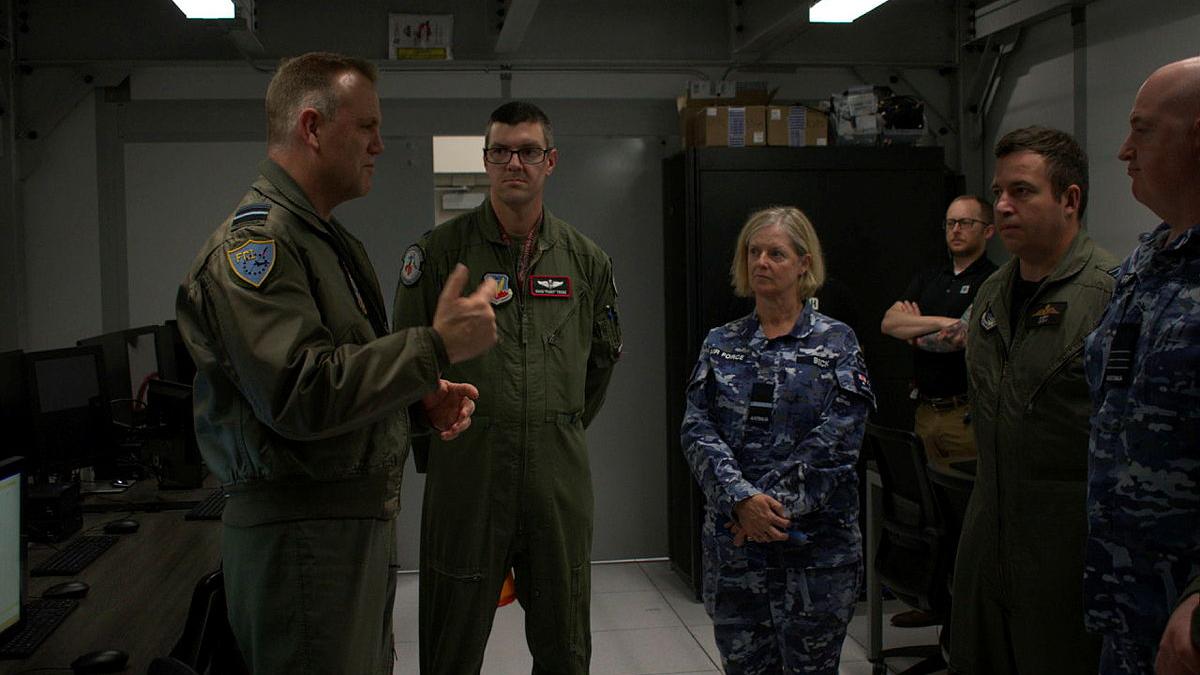
On a synthetic training exercise at Nellis Air Force Base, RAAF and United States Air Force (USAF) personnel integrated a RAAF E-7A simulator – Virtual Wedgetail 2 – into USAF’s Joint Simulation Environment (JSE) for the first time from February 9 to 13.
The JSE is the US’s most advanced synthetic battlespace, designed to deliver graduate-level preparation for complex, large-force combat operations that are difficult to replicate in live open-air ranges.
Virtual Wedgetail 2 Project Manager from the Air Warfare Centre, WGCDR Mick Tully, said integrated synthetic training was growing increasingly important.
“Synthetic training environments like the Joint Simulation Environment allow us to more easily replicate the complexity, fidelity and pace of a modern fight in ways that are increasingly difficult and extremely costly to achieve in live flying exercises,” WGCDR Tully said.
The exercise brought together RAAF participants from 2SQN, 3SQN, 77SQN and 114MCRU, alongside USAF Air National Guard pilots from the 100th Fighter Squadron. All training was conducted under the expert direction of USAF’s 31st Combat Training Squadron.

31st Combat Training Squadron Commander LTCOL James Carfagno said exercises like these enabled USAF and RAAF crews to develop tactics, trust and interoperability in the same operational environment.
“Training in a shared synthetic battlespace means our forces can prepare for the complexity of future conflicts long before they deploy together,” LTCOL Carfagno said.
Also supporting the exercise was the lead E-7A instructor, SQNLDR Kieran Frost.
“Although the JSE is still rapidly developing, the integration aspects combined with the high level of security and debriefing tools available are second to none,” SQNLDR Frost said.
“Operating in this environment allows RAAF crews to experience the scale and flexibility of coalition training in ways that are not currently achievable within our domestic synthetic systems.”
The integration of Virtual Wedgetail 2 is the result of almost four years of RAAF-USAF project collaboration to overcome many technical, security and information-sharing challenges required to field an Australian capability within a highly sensitive US facility.
Expertise from the Defence Science and Technology Group, Boeing Defence Australia, Huntington Ingalls Industries and SERCO was also essential to the installation of the Virtual Wedgetail 2.
As the JSE continues to evolve, RAAF and USAF interoperability will continue to grow in its importance.
Related stories


