The Matrix revisited
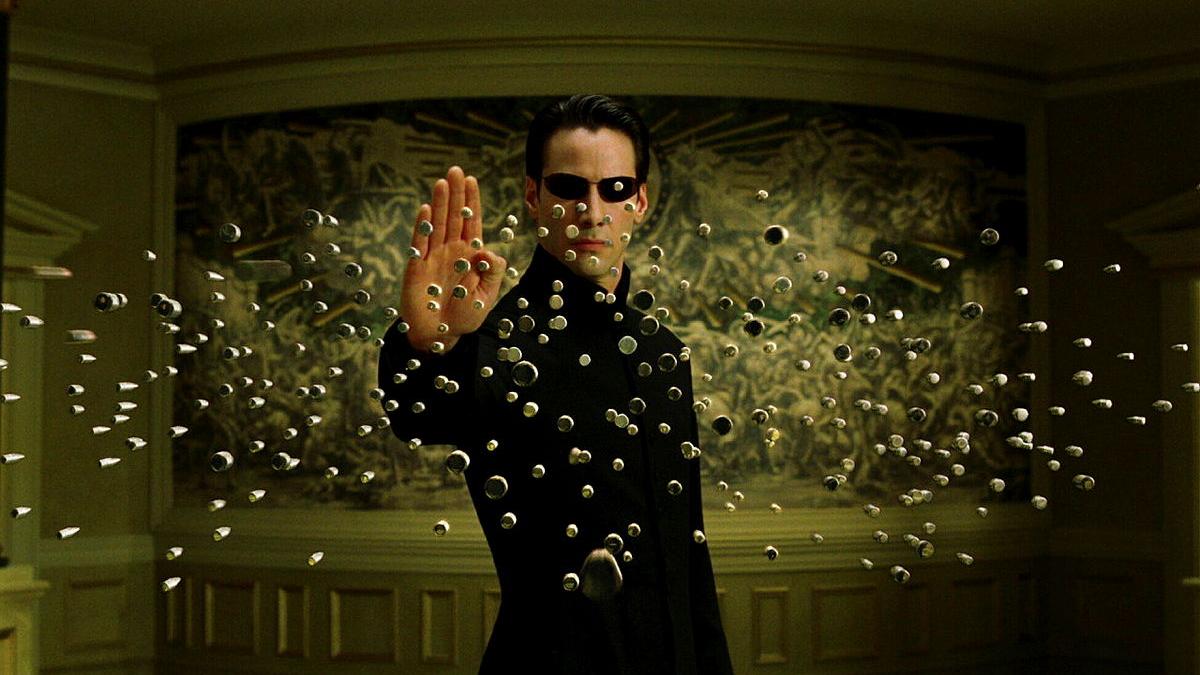
During my early years in Canberra, I met someone through OKCupid who seemed ordinary in most respects. But about an hour into our date, he mentioned he believed that we're really living inside a Matrix. Like, the Matrix.
We usually talk about films in terms of things like its plot, acting, cinematography, etc. Rarely do we ask: did this film make us question the nature of reality?
The unique achievement of The Matrix is that for some, it did just that. But in order to have achieved that, it also needed to work as a film. Just as a successful argument requires more than a solid assertion – it has to be supported by sound reasoning and be delivered by a persuasive orator – The Matrix's philosophical premise had to be carried by an immersive, accessible and entertaining vehicle.
And it was. The Wachowskis produced a film that was fun to watch, beautiful to look at, and their unique proposition was matched by the groundbreaking ways they used special effects. The final ingredient is that with its audacious gambit, The Matrix needed to sell something people were willing to buy. And here, it managed to speak to those who felt apart from mainstream society.
At its heart, The Matrix is a text about alienation. Say you feel a sense of not-belonging. You don't feel a connection with other people. Your job is unsatisfying, the world around you bleak and grey. The film offers a compelling explanation for those feelings, validates them, and further, provides a grand explanation that puts you at the centre as the hero. And it offers you community, in a small cabal of people who also know the truth.
Neo is a stand-in for this viewer. He has been seeking an answer to what the Matrix is, which he thinks is the key to his sense of alienation. He is a fantasy that espouses: you are special, you are brave, you will overcome. The choice of Keanu Reeves as Neo serves this idea - he's handsome without being too attractive (aspirational but attainable). His acting is wooden at times, his vocal flexion stilted (noticeable especially in his final voiceover) - which it could be argued enhances his embodiment of an 'everyman' figure, that he's not totally perfect and natural.
Contrast him with Hugo Weaving, the chilling, inhuman villain Agent Smith. His vocal performance and facial expressiveness is as fluid and yielding as Reeves' is limited.
We usually talk about films in terms of things like its plot, acting, cinematography, etc. Rarely do we ask: did this film make us question the nature of reality?
Now, the question is, does The Matrix, or would it, still work on a 2026 audience? Would a person who watches it today be as likely to believe its premise?
Obviously this question is unanswerable, but if you could continue to humour me –
On the one hand, we're even closer to the future the film posited - that the apocalypse occurred because AI got too intelligent, slipped our control and came to control us, with the Matrix being the simulation AI created for human consciousness, so we can't see reality as it really is (a bleak hellscape, basically).
From the vantage point of late 2026, with AI so much more capable than when the film came out, and with the spate of news about AI agents going rogue, we should be more likely to feel that the film is a prophecy, if not a reality.
Then again – are people more likely to attribute their sense of alienation these days to causes political, societal, chemical, than to living in an AI-created simulation?
It's another question that doesn't really have an answer. But on another front, as a friend argued, our world no longer looks like the world of 1999 that The Matrix is set in. It's less relatable to us, just as a film set in the 1980s would've felt less relatable to an audience member of 1999. So on that score, it loses some of its immersive quality and consequently, its power to persuade.
So maybe The Matrix wouldn't have the same kind of influence today as it once had. But what I can say from my recent rewatch, is that it remains a great movie with technical achievements that still hold up. You can still enjoy it as a high concept, entertaining product – even if you don't, and didn't, believe the concept.
Related stories


