London Falling falls short
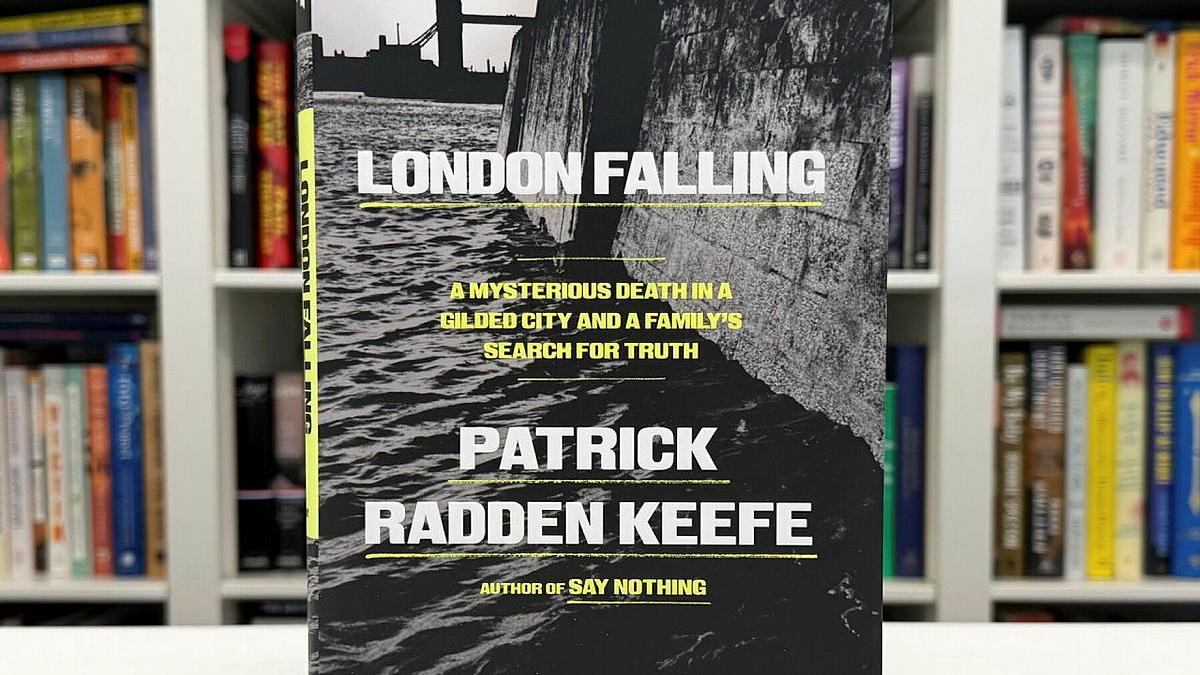
There is an expression that disappointment lies in the gap between expectation and reality. The greater the gap, the greater the disappointment. With London Falling: A Mysterious Death in a Gilded City and a Family’s Search for Truth, the latest book by Patrick Radden Keefe, that gap was not a gulf, but it was large enough that it sent me on my own quest to try to understand my dissatisfaction.
Radden Keefe is the author of the reputedly excellent book Say Nothing: A True Story of Murder and Memory in Northern Ireland, which I didn’t read, but which was adapted into the excellent mini-series, which I did watch. Like many of his past books, London Falling is broadly a work of true crime.
A 19-year-old boy, Zac Brettler, leaps to his death from the balcony of a luxury high-rise London apartment. His grieving parents trace the events leading up to the event and learn some astonishing facts about their son. Among them, that Zac had been passing himself off as the son of a Russian oligarch and that he’d gotten mixed up with unscrupulous, dangerous people.
At the core of the book is the mystery of what happened to Zac. What happened in that apartment and why did he jump. But it’s also about so much more than that. More on that later.
Rightly or wrongly, what set my expectations about London Falling were two-fold. First was knowledge of Radden Keefe’s reputation as an uber investigative journalist. The second was: what happens when you put an uber investigative journalist onto an unsolved, probable crime?
I believed that Radden Keefe would swoop in, do his deep investigative journalism-ing, and uncover the answer to Zac's death beyond reasonable doubt.
The answer was informed by my other recent foray into true crime – re-reading John Carreyrou’s 2018 book Bad Blood: Secrets and Lies in a Silicon Valley Startup.
In Bad Blood, Carreyrou, another American investigative journalist, expands on his Wall Street Journal reporting that exposed Elizabeth Holmes as a fraud. Carreyrou went against the consensus, and defied strong pressure from powerful supporters of Holmes, to definitively prove that she had pulled off a stunning con.
So with London Falling, I believed that Radden Keefe would swoop in, do his deep investigative journalism-ing, and uncover the answer to Zac’s death beyond reasonable doubt. What he wound up doing was answering the question in more of a philosophical, speculative way that I didn’t find nearly as satisfying and left me feeling like something was missing.
This isn’t to say that London Falling is without its merits. Radden Keefe is a talented storyteller (and has elsewhere been described as “masterful”). His technique with London Falling (and perhaps his other books too) is the literary version of a photomosaic. In offering insights about Zac, the Brettlers and other players in the story, he gives us dozens of vignettes of interesting histories and digressions. So we learn about everything from the decline of London as an economic powerhouse and how the city is now bankrolled by and beholden to wealthy Russians, the failures and corruption of Scotland Yard, London’s criminal underworld, to South Asian migration patterns.
When you zoom out, all this offers a rich, almost four-dimensional portrait of Zac Brettler. But like a photomosaic portrait, the problem is, the final picture is still a bit blurry.
Related stories


